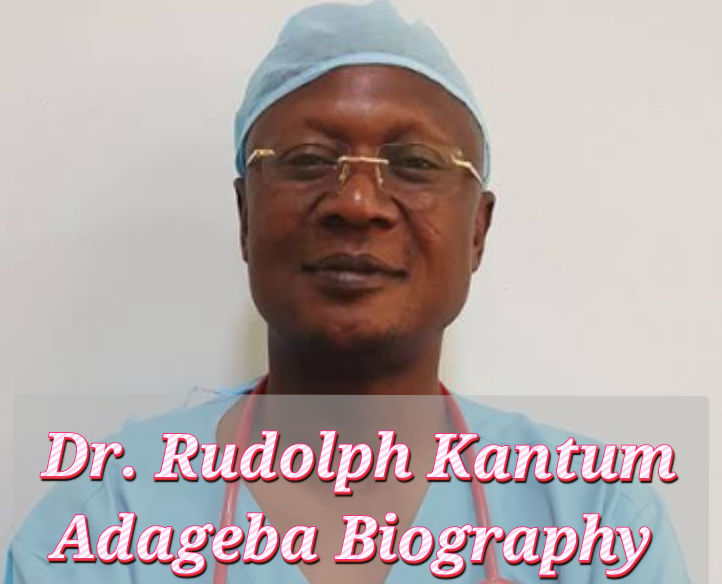
Dr. Rudolph Kantum Adageba Biography
Dr. Rudolph Kantum Adageba is a well known doctor in Ghana. He works as a fertility specialist and obstetrician gynecologist. Many people in Ghana and other parts of Africa know him for his help with infertility problems. He serves as the Chief Executive Officer of Ruma Fertility and Specialist Hospital in Kumasi. He also leads the Fertility Society of Ghana as its president.
This article tells his story in a simple way. It covers his early years, school days, career, and the difference he makes in reproductive health. Infertility affects many couples in Africa. It brings emotional pain, social pressure, and money problems. Dr. Adageba works hard to bring hope through modern treatments like IVF. His journey shows how one person can improve healthcare in a developing country. Readers will learn useful facts about his life and the field of fertility medicine.
Dr. Rudolph Kantum Adageba Early Life
Dr. Rudolph Kantum Adageba grew up in Kumasi, in the Ashanti Region of Ghana. He comes from a background that valued hard work and learning. From a young age, he showed strong interest in books and education. In radio interviews, he shared that his passion for learning made him read the dictionary like a storybook. This habit helped him build a rich vocabulary and strong foundation for his studies.
Life in Kumasi during his early years exposed him to the daily realities of Ghanaian families. He saw how health issues affect communities. These experiences likely planted the seed for his future career in medicine. He started from humble beginnings, as he once described in a public talk. He worked his way up step by step without losing focus.
Details about his exact birth date or parents remain private. However, his story reflects many young Ghanaians who push through challenges to achieve their dreams. His early life taught him discipline and commitment, qualities that define his professional success today.
Dr. Rudolph Kantum Adageba Education
Dr. Adageba received his basic medical training outside Ghana. He studied at Rostov On Don Medical University in Russia. He completed his medical degree there in 1996. This international education gave him a solid base in medicine and exposure to different healthcare systems.
After returning to Ghana, he gained practical experience. He worked as a medical officer, medical superintendent, and District Director of Health Services. These roles helped him understand public health needs at the community level.
In 2001, he began postgraduate training with the West African College of Surgeons. He focused on Obstetrics and Gynaecology. He finished this fellowship in 2007 and became a Fellow of the West African College of Surgeons in 2008. This qualification marked him as a specialist ready for complex cases.
He continued learning in 2011. He completed a Clinical Fellowship in Assisted Reproductive Technologies at Rotunda Hospital in Mumbai, India. That same year, he also did a three month clinical attachment at the University of Michigan Centre for Reproductive Medicine in the United States. These trainings equipped him with skills in IVF and other modern fertility treatments.
His education path shows a clear focus on continuous improvement. He combined local needs with global best practices.
Dr. Rudolph Kantum Adageba Personal Life
Dr. Adageba keeps most details of his personal life private, which is common for many professionals. He lives and works in Kumasi, Ghana. Public records and interviews mention that he has children. One of his sons has followed in his footsteps and become a medical doctor.
He often speaks about balance between work and family. In interviews, he emphasizes focus and avoiding distractions that do not add value. His dedication to medicine comes from a deep desire to help others. He finds gynecology rewarding because patients often see quick positive results from treatment.
Outside medicine, he participates in community activities. He has served in Rotary Club leadership roles, such as President of the Rotary Club of Kumasi East. These activities show his commitment to service beyond his hospital work.
Dr. Rudolph Kantum Adageba Net Worth
Public information about Dr. Rudolph Kantum Adageba net worth is not available. As a doctor who runs a specialist hospital, he earns income from medical practice and hospital operations. However, no official or verified figures exist in public records. Discussions about wealth for medical professionals in Ghana usually remain private. Readers should focus on his professional achievements rather than personal finances.
Dr. Rudolph Kantum Adageba Career
Dr. Adageba built a strong career in obstetrics, gynecology, and fertility medicine. After his fellowship, he worked as a Senior Specialist at Komfo Anokye Teaching Hospital in Kumasi. There, he treated many patients with fertility problems and general women health issues.
In 2012, he took a big step. He founded Ruma Fertility and Specialist Hospital in Kumasi. The hospital offers world class services for infertility treatment, including IVF, ICSI, and IUI. It also provides antenatal care, safe deliveries, and other specialist services like urogynaecology. The center has helped many couples in Ghana and beyond achieve pregnancy.
He leads the Fertility Society of Ghana. In this role, he advocates for better access to fertility care. For example, he has called on the government to include infertility treatment under the National Health Insurance Scheme. He describes out of pocket payments as unfair for many families.
His work extends to research and teaching. He has published many papers on topics such as caesarean delivery attitudes, cervical cancer screening, and outcomes of IVF treatments in Africa. He contributes chapters to medical textbooks on infertility in tropical settings. His research appears in respected journals and helps improve practices across the continent.
Dr. Adageba plays an active part in African fertility networks. He contributes data to the African Network and Registry for ART. This work helps track success rates and challenges in different countries. He also trains upcoming doctors in fertility medicine, addressing the shortage of specialists in Ghana.
His career shows dedication to both patient care and system improvement. The hospital he founded continues to grow as a center of excellence in West Africa.
Dr. Rudolph Kantum Adageba Controversies
No major public controversies or scandals appear in reliable reports about Dr. Rudolph Kantum Adageba. He maintains a professional reputation focused on ethics and quality care. Like many doctors in reproductive medicine, he works in a sensitive field that sometimes raises general debates about IVF ethics, costs, or access. However, these discussions remain about the broader industry rather than any personal issues. He promotes ethical standards in his leadership roles.
Dr. Rudolph Kantum Adageba Legacy
Dr. Adageba leaves a growing legacy in African reproductive health. He helped establish one of the successful IVF centers in Ghana at a time when such services were rare outside big cities. His hospital brings advanced treatment closer to families in the Ashanti Region and beyond.
Through research and advocacy, he raises awareness about infertility as a medical issue, not just a social one. His push for insurance coverage aims to make treatment fairer for all income groups. He contributes to training programs that will produce the next generation of fertility specialists in Ghana.
His publications and participation in African ART registries add valuable data to global knowledge. This information helps policymakers and doctors improve services in resource limited settings. Many couples credit specialist care like his for the joy of having children.
Overall, his legacy centers on hope, expertise, and leadership. He proves that quality healthcare can grow in Africa through determination and skill.
Conclusion
Dr. Rudolph Kantum Adageba story inspires many in medicine and beyond. From his training in Russia to building a leading fertility hospital in Ghana, he stayed focused on helping couples. His work addresses real problems like infertility in our society. He combines clinical skills with research, teaching, and advocacy.
As fertility medicine advances in Africa, his contributions will continue to matter. He shows that doctors can change lives by solving local challenges with global knowledge. Readers interested in reproductive health or career growth in medicine can learn from his example of lifelong learning and service.
For anyone facing fertility issues, consulting qualified specialists remains important. Dr. Adageba example encourages hope and informed choices.
FAQs
Who is Dr. Rudolph Kantum Adageba?
He is a Ghanaian fertility specialist, obstetrician, and gynecologist. He serves as CEO of Ruma Fertility and Specialist Hospital in Kumasi and president of the Fertility Society of Ghana.
Where did Dr. Adageba study medicine?
He completed his basic medical training at Rostov On Don Medical University in Russia in 1996. He later trained in India and the United States for fertility specialization.
What is Ruma Fertility and Specialist Hospital?
It is a specialist hospital in Kumasi, Ghana, founded in 2012. It provides IVF, other assisted reproduction services, antenatal care, and gynecological treatments.
What are Dr. Adageba main achievements?
He established a successful IVF center in Ghana, published research papers, contributed to medical textbooks, and advocates for better fertility care access through insurance.
Does Dr. Adageba have children?
Yes, public mentions note that he has children, including at least one son who is a medical doctor.
Has Dr. Adageba been involved in any controversies?
No verified public controversies exist about him. He maintains a focus on ethical medical practice.
How can someone contact Ruma Fertility Hospital?
The hospital is located in Kumasi. Interested persons can visit their official website or contact them through available phone numbers for appointments.
Why is infertility treatment important in Ghana?
Infertility causes emotional and social stress for many couples. Access to quality care helps families and reduces stigma around the condition.