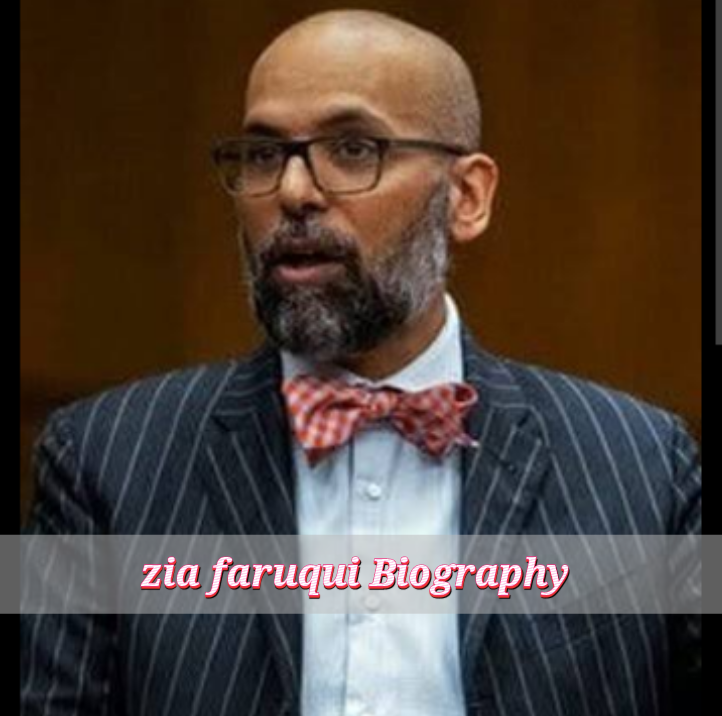
Zia Faruqui Biography
Zia Faruqui serves as a United States Magistrate Judge for the District of Columbia. His story shows how hard work, education, and public service can open doors in the American legal system. Appointed on September 14, 2020, he became the first Pakistani American to hold this position. This Zia Faruqui biography explores his background, career steps, and contributions to justice in clear and simple terms. Readers will learn about his path from student to federal judge and why his work matters today.
Zia Faruqui Early Life
Zia Faruqui grew up in a family shaped by immigration. His parents and his wife’s parents all moved to the United States. He has spoken about the courage it takes for families to start a new life in a new country. On UN International Migrants Day, he shared a message honoring his family members, including his mother, father, mother in law, and father in law, for their leap of faith.
Public records do not share many private details about his childhood or exact birth date. Like many judges, he keeps his early personal story private. What stands out is his connection to the Pakistani American community and his Muslim faith. These roots influenced his later work on community outreach and civil liberties. He learned early values of resilience, education, and service that guided his choices.
His story fits the experience of many immigrant families who value hard work and opportunity in America. These early influences helped him aim for higher education and a career in law.
Zia Faruqui Education
Zia Faruqui attended Georgetown University for both his undergraduate and law degrees. He earned his Bachelor of Arts degree in 2001. He then completed his Juris Doctor degree from Georgetown Law in 2004.
Georgetown University gave him strong training in law, government, and public service. The school has a long history of preparing students for careers in justice and national service. Faruqui later returned as an adjunct professor to teach Constitutional Law. He also taught classes on criminal rehabilitation at Harris Stowe State University earlier in his career.
His education equipped him with skills in legal research, writing, and understanding complex issues. These tools proved useful in his work as a lawyer and judge. Many people who study at Georgetown go on to important roles in government and courts. Faruqui followed this path with focus and dedication.
Zia Faruqui Personal Life
Zia Faruqui keeps his family life private, which is common for federal judges. He is married. His wife works as a doctor, and he has referred to her warmly in social media posts as “Dr. Wife.” Both his family and his wife’s family come from immigrant backgrounds.
He has not publicly shared details about children or other family members. His public comments often highlight appreciation for his family’s support and the immigrant experience. Faruqui participates in community activities and advisory roles. He serves on the Advisory Council of the Islamic Scholarship Foundation. He also supports efforts to promote diversity, equity, and inclusion in the legal field.
Outside of court, he has mentored young lawyers and encouraged networking. In interviews and talks, he stresses the importance of mentors, stepping out of comfort zones, and believing in oneself. His personal values center on service, fairness, and building trust in communities.
Zia Faruqui Net Worth
Zia Faruqui’s net worth is not publicly available in detail. Federal judges file standard financial disclosures, but these do not require full public release of personal wealth figures. Like most judges in his position, his main income comes from his government salary.
Before becoming a judge, he worked as a federal prosecutor and in private practice. Magistrate judges in the United States generally earn salaries set by federal guidelines, often above two hundred thousand dollars per year. There are no verified reports of unusual wealth or business interests. His professional focus has remained on public service rather than private financial gain.
Zia Faruqui Career
Zia Faruqui built his career step by step through dedication and varied experiences. After law school in 2004, he worked as a litigation associate at Willkie Farr and Gallagher LLP in Washington, D.C. From 2004 to 2008, he handled government investigations and commercial litigation. He also did pro bono work to help survivors of domestic violence and homeless people access benefits.
He then served for twelve years as an Assistant United States Attorney. He started in the Eastern District of Missouri in St. Louis and later moved to the District of Columbia. As a prosecutor, he focused on complex cases at the intersection of national security, financial crimes, and cyber issues. His work included prosecutions involving terrorists’ use of cryptocurrency, North Korean weapons proliferation, darknet sites for child exploitation, and theft of cultural antiquities. He also represented the Department of Justice at international conferences on these topics.
In 2011, he took on the role of Muslim Arab outreach coordinator for the U.S. Attorney’s Office. In this position, he led cultural sensitivity training for law enforcement and spoke at community events about civil liberties and tolerance.
On September 14, 2020, the U.S. District Court for the District of Columbia appointed him as a United States Magistrate Judge for an eight year term. His responsibilities include handling federal criminal and civil matters, such as pretrial issues, misdemeanors, and cases where parties consent. He has presided over hundreds of cases related to the January 6, 2021 Capitol events.
Other notable work includes opinions on applying U.S. sanctions to cryptocurrency, seizure of assets like a Russian oligarch’s superyacht, and orders compelling records related to the Rohingya genocide from social media platforms. He also supervises a Reentry Court that helps people after incarceration and supports prison education programs, including a coding class with MIT.
Zia Faruqui Controversies
Zia Faruqui has faced public attention in some high profile cases, especially those involving political sensitivity. As a former prosecutor now on the bench, he has sometimes criticized government handling of cases. In several rulings, he has expressed concerns about due process, jail conditions, and prosecutorial practices.
For example, he has addressed delays and resource issues in large scale investigations. In one January 6 related matter, he noted the massive scope of cases and stressed the need for fairness. More recently, in cases tied to current events, he has raised issues about jail treatment and charging decisions. He has issued apologies in court for certain conditions defendants faced and emphasized constitutional protections.
These moments reflect his commitment to due process rather than any personal agenda. As a judge, his role includes checking government actions to protect rights. Public reactions have varied, with some praising his independence and others criticizing specific decisions. All statements come from court records and public proceedings. No formal misconduct findings exist against him.
Zia Faruqui Legacy
Zia Faruqui’s legacy centers on service, diversity, and adapting law to new challenges. As the first Pakistani American in his judicial role, he represents progress in federal bench diversity. His career shows how immigrant backgrounds can strengthen understanding of justice and civil liberties.
He has contributed to important areas like cryptocurrency regulation, national security prosecutions, and rehabilitation programs. By supervising reentry efforts and prison education, he supports second chances for people leaving incarceration. His outreach work has helped build trust between law enforcement and communities.
Future lawyers and judges can learn from his emphasis on mentorship, networking, and public service. His rulings add to legal discussions on technology, sanctions, and due process in modern times. Overall, his work strengthens the idea that the justice system should be fair, thorough, and open to all.
Conclusion
Zia Faruqui rose from an immigrant family background to a respected position as a U.S. Magistrate Judge through education, hard work, and commitment to service. From Georgetown Law to years as a prosecutor and now on the federal bench, he has handled complex cases with focus on national security, emerging crimes, and fairness. His story inspires many, especially those from diverse or immigrant communities who want to serve in law. As challenges in justice continue to evolve, judges like Faruqui play a key role in upholding the Constitution while addressing new realities. His career reminds us that dedicated public service can make a real difference.
FAQs
Who is Zia Faruqui?
He is a United States Magistrate Judge for the District of Columbia, appointed in September 2020. He previously worked as a federal prosecutor and lawyer.
What is Zia Faruqui’s background?
He is a Pakistani American with deep ties to immigrant family values and the Muslim community.
Where did Zia Faruqui study?
He earned his bachelor’s degree in 2001 and law degree in 2004 from Georgetown University.
Is Zia Faruqui married?
Yes. His wife is a doctor.
What cases has Zia Faruqui handled?
He has worked on cryptocurrency terrorism cases, January 6 matters, sanctions issues, and various criminal and civil federal cases.
What is Zia Faruqui known for?
He is known for his expertise in national security and financial crimes, his historic appointment, and his focus on due process and rehabilitation.
How long has Zia Faruqui been a judge?
He has served as a Magistrate Judge since September 14, 2020.