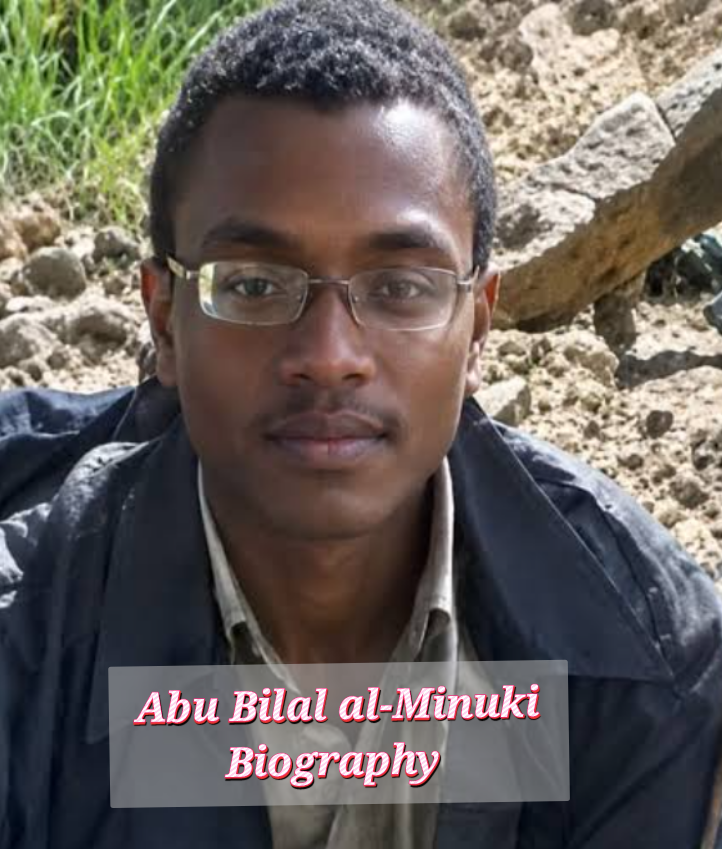
Abu Bilal al-Minuki Biography
Abu Bilal al-Minuki was a senior leader linked to the Islamic State group in West Africa. Reports describe him as a key figure in the Islamic State West Africa Province, also known as ISWAP. This article shares clear facts about his life based on available public records and official statements.
People want to know more about such figures because their actions affected security in the Lake Chad Basin area. This region covers parts of Nigeria, Chad, Niger, and Cameroon. Many families there have faced violence for years. Understanding his path helps show how local groups connected to larger networks.
This biography covers his background, known activities, and reported death in May 2026. We use simple words to make it easy to read. The goal is to give facts without guessing. We include details that answer common questions from searches. These include his origins, rise in groups, and what his death might mean for the area.
Al-Minuki, also called Abu Mainok or Abubakar Mainok, was born in Nigeria. He became active in militant groups active in northeastern Nigeria. His story shows how the Boko Haram split led to new groups like ISWAP. These groups caused harm to many civilians, soldiers, and communities.
By reading this, you will learn the timeline of events. You will also see the efforts by Nigerian and international forces to improve safety in the region. Let us start with his early life.
Abu Bilal al-Minuki Early Life and Background
Abu Bilal al-Minuki was born in 1982 in Mainok, near Benisheikh in Borno State, Nigeria. Borno State lies in northeastern Nigeria. It shares borders with Cameroon, Chad, and Niger. This area has rich history and culture, with many Kanuri people living there. But it also faced big challenges like poverty and later, violence.
Public records say little about his family or childhood days. Like many young people in the region at that time, he grew up during periods of economic difficulty. Borno State had limited jobs and services in some villages. Mainok itself saw attacks in later years, which made the area known in security reports.
The early 2000s brought changes to northeastern Nigeria. Groups began to spread ideas against the government and Western education. Mohammed Yusuf started Boko Haram around this period. Many young men from Borno joined or got influenced by these movements. Al-Minuki came from this same environment.
He lived in a part of Nigeria where cross-border movement was common. People often traveled for trade or family reasons between Nigeria, Chad, and Niger. This later helped some groups move fighters and goods. But in his early years, these were normal community links.
By the time violence increased, al-Minuki was already an adult. Reports note he became active in militant circles in the Borno area. His hometown name likely gave him the “Mainok” or “al-Minuki” part of his identity. This is a common way people get linked to their home places in the region.
Abu Bilal al-Minuki Education
There is very little public information about Abu Bilal al-Minuki’s formal education. Most security reports do not mention schools he attended or any higher studies. Many young people in rural Borno during the 1980s and 1990s went to local Quranic schools or basic government primary schools if available.
Some areas had madrasas for Islamic learning. Others had limited Western-style education. Boko Haram later opposed many forms of Western schooling, but this came after al-Minuki’s early years. No verified records link him directly to specific schools or teachers in open sources.
His later skills in operations came from experience inside militant groups rather than classroom learning. This is common for many field commanders in such conflicts. They learn tactics, leadership, and logistics on the ground over time.
Limited details on education are normal for people who later join underground groups. They often keep low profiles. Official biographies from governments focus more on his later actions than early school days.
Abu Bilal al-Minuki Career
Al-Minuki’s known career started in the context of the Boko Haram insurgency. Before 2015, he served as a senior figure in Boko Haram, according to Nigerian military statements. He took part in operations and rose within the group.
In 2015, he pledged allegiance to the Islamic State group. This happened when some Boko Haram leaders wanted closer ties to ISIS central command. This move played a part in later splits inside the insurgency.
After the pledge, he worked with the faction that became ISWAP. ISWAP formed more clearly around 2016. It separated from the group led by Abubakar Shekau. Al-Minuki gained importance after the 2018 death of Mamman Nur, a veteran ISWAP commander. He helped coordinate activities in the Lake Chad area.
His roles included guidance on operations, according to US and Nigerian reports. In June 2023, the United States designated him a Specially Designated Global Terrorist. The US Treasury and State Departments linked him to ISIS General Directorate of Provinces work. This involved support for groups in the Sahel and West Africa. Sanctions froze any assets and banned dealings with him.
Reports say he helped with logistics, such as moving equipment and supporting cells across borders. He stayed based mainly in the Sahel and Lake Chad region. He kept a low public profile compared to some other leaders. This earned him descriptions like “shadow commander” in some news stories.
His activities connected local fighting to wider ISIS goals. ISWAP controlled some territory and carried out attacks on military and civilian targets. These actions caused many deaths and displaced people over the years. Nigerian forces and the Multinational Joint Task Force worked to push back against these groups.
Note that exact day-to-day duties are hard to confirm fully because of the secret nature of such networks. Information comes from government statements, intelligence summaries, and open-source analysis.
Abu Bilal al-Minuki :The Killing of Abu Bilal al-Minuki (May 2026)
On May 16, 2026, Abu Bilal al-Minuki was killed in a joint operation by United States and Nigerian forces. The operation took place in the Lake Chad Basin area, specifically reported in Mitile, Borno State.
US President Donald Trump and Nigerian President Bola Tinubu announced the outcome. They described it as a coordinated strike on his compound. Reports say he died along with several lieutenants. US Africa Command (AFRICOM) confirmed the operation through intelligence and cooperation built over months.
This was not the first report of his death. In 2024, some Nigerian media mentioned claims of his killing, but later information showed he remained active. The 2026 operation included confirmation steps to verify identity.
The strike targeted a senior figure in ISIS structures for the region. Officials called it a major step in counterterrorism efforts. It showed improved sharing of information between Nigerian and US forces. Air and ground elements took part, with efforts to block escape routes.
No independent visual confirmation appeared immediately in public. Governments relied on intelligence assessments for the initial statements. ISIS central did not issue an immediate comment at the time of reports.
Abu Bilal al-Minuki Legacy
Al-Minuki’s death removes one experienced leader from ISWAP and ISIS networks in Africa. His career spanned more than a decade in different factions. He linked local fighters to broader goals of the Islamic State group.
For communities in Borno and the Lake Chad area, any reduction in militant leadership can bring hope for fewer attacks. But the insurgency involves many people and deep roots. Past removals of leaders sometimes led to new figures stepping up or temporary regrouping.
Security experts watch how ISWAP will react. The group may try to show strength with new actions or go quieter for a time. Nigerian forces continue operations with partners to hold gains.
His story highlights the cross-border nature of these threats. Groups use the large Lake Chad wetlands and Sahel spaces to move. This needs ongoing cooperation among Nigeria, Chad, Niger, Cameroon, and international supporters.
On a wider scale, it shows the focus on targeting financial and logistics roles inside ISIS provinces. Sanctions and operations aim to cut support lines. Long-term solutions also need better governance, jobs, and services in affected areas to reduce recruitment.
Conclusion
The Abu Bilal al-Minuki biography gives a factual look at one man’s path from Borno State to senior roles in militant groups. Born in 1982, he joined Boko Haram, moved to the ISIS-aligned faction, and rose in ISWAP. US sanctions came in 2023. His reported death happened on May 16, 2026, in a joint US-Nigeria operation.
This case reminds us of the complex security issues in northeastern Nigeria and nearby countries. Violence displaced millions and killed many. Efforts by local and international forces continue to restore peace.
Lasting safety will come from both military actions and work on root causes like poverty and lack of opportunity. Communities need schools, health care, and fair governance. Many people in the region want normal life free from fear.
As events develop, staying informed with reliable sources helps. Counterterrorism is one part of a bigger picture that includes development and dialogue where possible.
FAQs
Who was Abu Bilal al-Minuki?
He was a Nigerian national born in 1982 in Mainok, Borno State. He held senior positions in Boko Haram and later ISWAP, an ISIS affiliate.
When and where was he killed?
Reports state he was killed on May 16, 2026, during a joint US-Nigeria operation in the Lake Chad Basin area of Borno State.
What groups was he part of?
He started in Boko Haram, pledged to ISIS in 2015, and became active in ISWAP after the split.
Why did the US sanction him?
In June 2023, the US designated him a Specially Designated Global Terrorist for his leadership role in ISIS provincial support structures.
What might happen to ISWAP after his death?
Groups like this often adapt. New leaders may emerge. Security forces continue pressure while addressing local needs.
Was this his first reported death?
No. There were earlier claims in 2024, but he was confirmed active until the 2026 operation.
How does this affect people in Borno State?
It may reduce some command ability in the short term. But full peace needs more than one operation. Support for affected communities remains important.