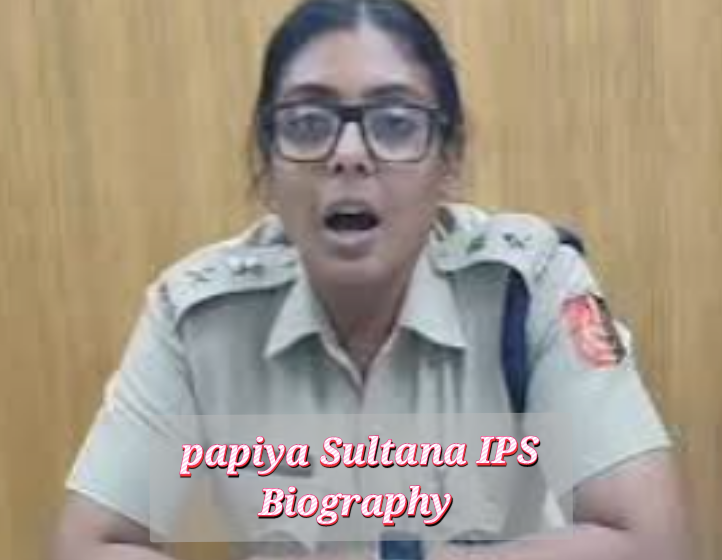
Papiya Sultana IPS Biography
Papiya Sultana IPS is a senior officer in the Indian Police Service from West Bengal. She holds the distinction of being the first Muslim woman from the state to join the IPS. Her story shows how hard work, education, and determination can help a person rise from a small village to important roles in law enforcement. She has worked on many cases, especially those involving women and children. She also continues her studies and supports social causes. This article shares her life in simple words so that readers of all ages can understand and feel inspired.
Papiya Sultana IPS Early Life and Background
Papiya Sultana was born on July 5, 1980, in a village in the Howrah district of West Bengal. She grew up in a simple family. Her father, Arjahan Haldar, worked as an engineer at the Uluberia Block Development Office. Her mother, Salema Jehan, served as a teacher at Khashkhamar High Madrasah.
Life in the village taught her important values like honesty and respect for others. She studied at Bauria High School. Many girls around her stopped education after school because of family traditions. But Papiya chose a different path. She wanted to study more and build a career. Her parents supported her dreams even when it was not common in their community.
As a young girl, she saw the challenges faced by women in her area. This experience later shaped her work as a police officer. She wanted to become a role model so that more girls from similar backgrounds could follow their goals. Her early years built a strong base of courage and kindness that helped her in difficult police duties.
Papiya Sultana IPS Education
Papiya Sultana worked hard in her studies. She completed her Bachelor of Science degree. After that, she earned an MBA before her marriage. She did not stop learning even after starting her career. She holds a Master’s degree in Gender Development. She also completed LLB and LLM degrees in law.
She learned Spanish and French through diploma courses. These language skills help her connect with more people during investigations and official work. She cleared the National Eligibility Test, also known as NET. Now she is pursuing a PhD in Women’s Studies at Jadavpur University.
Her education covers many subjects such as business, law, gender issues, and languages. This wide knowledge helps her handle complex police cases and understand social problems better. She uses her academic learning to improve policing methods, especially in areas related to women and children. Many young students look up to her as an example of lifelong learning.
Papiya Sultana IPS Career
Papiya Sultana began her journey in public service by clearing the West Bengal Civil Service examination in her first attempt in 2008. She became the first Muslim woman from the state to achieve this. She started as Deputy Superintendent of Police.
In her early years as DySP, she focused on child protection. In less than one year, she and her team rescued 123 trafficked girls. They also helped with rehabilitation and counseling. The Chairman of the National Commission for Protection of Child Rights appreciated her efforts.
She later joined the Indian Police Service. Reports place her in the 2015 batch of the West Bengal cadre. She has held several important positions over the years. These include Additional Superintendent of Police in Traffic in Murshidabad, Deputy Commandant in State Armed Police, and other roles in different districts.
As of 2026, she has served as Superintendent of Police in Paschim Medinipur. She has handled traffic management and introduced better systems in some areas. She has faced many transfers during her service, which is common for officers who take on challenging duties. Her work includes community policing, women’s safety, and anti-trafficking efforts.
She also contributed to training and administrative roles in the police force. Her approach combines strict law enforcement with care for victims. Many people remember her for treating prisoners with respect and trying new ideas like using dance and activities for rehabilitation in some cases.
Papiya Sultana IPS Controversies
Like many public officers, Papiya Sultana has faced public attention during sensitive cases. In 2024, she was involved in inquiries related to the Sandeshkhali incidents. Some reports mentioned her asking for evidence from complainants during investigations. These matters became topics of discussion in media and public forums.
She has also been part of other official duties that drew comments. In one reported event at a public function, her actions were discussed online. Different people had different views on these situations. Police officers often work in difficult and politically sensitive environments, and their decisions can lead to varied opinions.
Official records show she continued her duties and received new postings after such events. Transfers and public discussions are part of the life of senior police officers in India. She has maintained her focus on police responsibilities through these times.
Papiya Sultana IPS Personal Life
Papiya Sultana married Badrul Alam, a software engineer, in May 2006. Her husband supported her studies and career goals. The couple has a son. Family members were initially worried about her choice of a demanding job, but they later felt proud of her achievements.
She has spoken about balancing family life with police work. Her story shows that support from family can help women succeed in tough careers. She lives by values of hard work and service. In interviews, she expressed hope that more Muslim women would join public services and change old mindsets.
Papiya Sultana IPS Legacy
Papiya Sultana has opened doors for many women, especially from minority communities. Her success as the first Muslim woman IPS officer from West Bengal inspires girls to dream big. She shows that education and determination can overcome social barriers.
Her work in child rescue and women’s issues has helped many victims directly. By combining police duty with academic research on gender topics, she brings new ideas to law enforcement. Young aspirants in civil services often look at her journey for motivation.
She stands as an example of quiet service. Her focus on rehabilitation, community safety, and continuous learning adds to her lasting impact. Future officers may follow her path of learning throughout life and serving with empathy.
Conclusion
Papiya Sultana’s life is a story of steady progress from a village in Howrah to senior roles in the Indian Police Service. She cleared tough exams on her first try, rescued many children from danger, and kept studying even while serving. Her journey teaches the importance of education, family support, and dedication to duty.
She faced challenges that come with public service but continued her responsibilities. Her example encourages more women to join policing and administration. As India works toward greater diversity in services, officers like her play an important role. Readers can take away simple lessons: study hard, stay kind, and keep working toward goals even when the path is not easy.
FAQs
When was Papiya Sultana born?
She was born on July 5, 1980.
What makes Papiya Sultana famous?
She is the first Muslim woman from West Bengal to become an IPS officer. She is also known for child rescue operations.
What are her educational qualifications?
She holds an MBA, Master’s in Gender Development, LLB, LLM, diplomas in Spanish and French, and is pursuing a PhD in Women’s Studies at Jadavpur University.
Who is Papiya Sultana’s husband?
Her husband is Badrul Alam, a software engineer. They married in May 2006.
What was her major achievement in child protection?
As Deputy Superintendent of Police, she helped rescue 123 trafficked girls in less than a year and supported their rehabilitation.
Where has she served recently?
She has served as Superintendent of Police in Paschim Medinipur in 2026.
Did she clear civil service exams in the first attempt?
Yes, she cleared the West Bengal Civil Service examination in her first attempt in 2008.
What is her role in women’s empowerment?
She works on gender issues, supports victims, and encourages Muslim women to join public services through her own example.