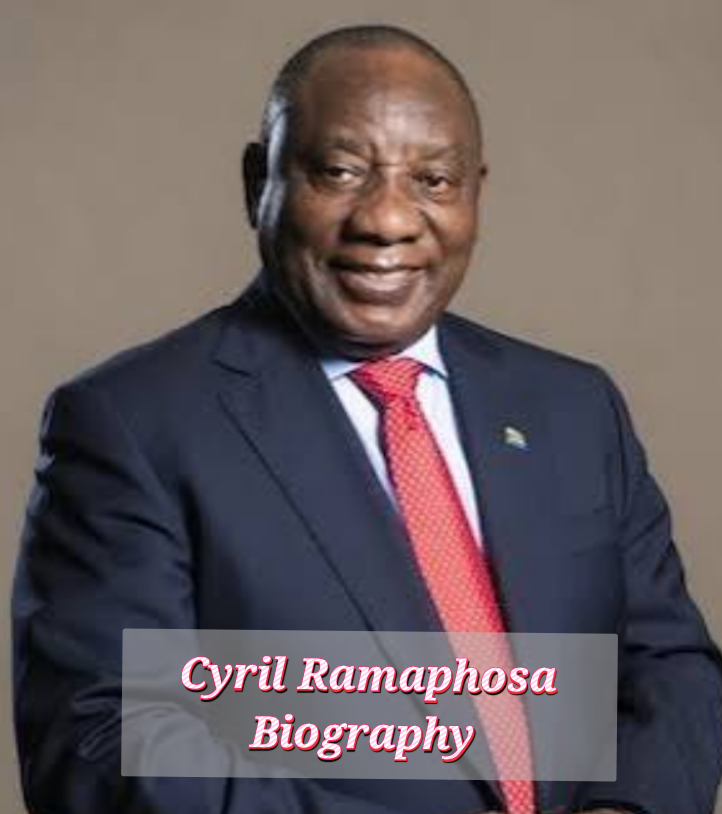
Cyril Ramaphosa Biography
Cyril Ramaphosa serves as the President of South Africa. His life story shows a clear path from a young person growing up under apartheid to becoming the head of the country. Many people search for the Cyril Ramaphosa biography because his experiences cover important parts of South African history. He took part in the fight against apartheid, helped build strong worker unions, played a big role in writing the new Constitution, and later returned to politics to lead the African National Congress and the nation.
Ramaphosa was born Matamela Cyril Ramaphosa on 17 November 1952. He grew up during a time when laws separated people by race and limited opportunities for black South Africans. His journey includes student activism, long periods in detention, leadership in the mineworkers union, work as a top negotiator for peace talks, success in business, and service as president since 2018.
This article explains his life in simple terms. It covers his early years, education, career steps, time as president, personal life, and some controversies. The goal is to help readers understand how one person’s efforts connect to the bigger changes in South Africa. His story teaches lessons about patience, negotiation, and working for a better future. By looking at dated events and clear facts, we can see the real path he followed.
Cyril Ramaphosa Early Life and Background
Cyril Ramaphosa was born in Johannesburg on 17 November 1952 to Samuel and Erdmuth Ramaphosa. His parents had Venda heritage. He was the second of three children. Samuel worked as a policeman before retirement. The family faced the strict rules of apartheid from the start.
In 1962, when Cyril was about ten years old, the authorities moved the family from Western Native Township to Soweto. Soweto was a large township outside Johannesburg where many black families lived. This forced removal was common under apartheid laws that controlled where people could stay.
Ramaphosa attended Tshilidzi Primary School in Soweto. He later went to Sekano Ntoane High School, also in Soweto. For his final school years, he moved to Mphaphuli High School in Sibasa, Venda. He finished high school there in 1971. At Mphaphuli, he took an active part in the Student Christian Movement and was chosen as its leader.
Life in Soweto during those years was not easy. Families dealt with limited services, crowded conditions, and daily effects of racial separation laws. These early experiences helped shape his views on fairness and justice. Religion played an important role in his family and school life. The Student Christian Movement gave him chances to develop leadership skills and think about community issues.
His background as a child of a retired policeman and a mother who supported the family gave him a sense of discipline. At the same time, seeing the unfair treatment of black South Africans planted seeds for his later activism. He grew up knowing the daily realities of apartheid, such as restrictions on movement, education, and jobs. These early years in Soweto and Venda formed the foundation for his strong interest in change.
Cyril Ramaphosa Education
Ramaphosa started university studies in 1972 at the University of the North, also known as Turfloop, in what is now Limpopo province. He registered to study law. While at university, he joined student groups that spoke out against apartheid.
He became involved with the South African Students Organisation and the Black Peoples Convention. These groups formed part of the Black Consciousness movement, which encouraged black South Africans to take pride in their identity and push for rights. He also continued his work with the Student Christian Movement and served as its chairman at the university.
In 1974, he helped organise a rally at the university to support FRELIMO, the group that had won independence for Mozambique from colonial rule. After the rally, police detained him under the Terrorism Act. He spent 11 months in solitary confinement. This was a harsh experience that tested his resolve.
After his release in 1975, he stayed active in student politics. Following the start of the Soweto Uprising in June 1976, he was detained again. This second time, he spent six months in solitary confinement and was released in February 1977.
Because of these detentions, he could not finish his law studies at the University of the North in the usual way. He continued his education through part time studies while working as a law clerk at a Johannesburg law firm. In 1981, he earned his B.Proc law degree from the University of South Africa, known as UNISA.
Later in life, several universities in South Africa and other countries gave him honorary doctorates in recognition of his work. His university years combined formal learning with real world activism. The time in detention taught him about the cost of speaking out, while his law studies gave him useful knowledge for future negotiations and constitutional work.
Cyril Ramaphosa Career
Ramaphosa began his professional life with a strong focus on worker rights. After completing his law degree in 1981, he joined the trade union movement. In 1982, he helped establish the National Union of Mineworkers and became its first general secretary. Under his leadership, the union grew from a small group to one of the largest and most powerful in the country, with membership reaching hundreds of thousands.
He led major strikes, including a large mineworkers strike in 1987 that lasted three weeks and affected the whole mining industry. These actions improved wages and conditions for workers while highlighting the unfair treatment under apartheid. His skills as an organiser and negotiator became well known.
In 1985, he played a key part in forming the Congress of South African Trade Unions. When the African National Congress and other banned groups became legal again in 1990, Ramaphosa moved into higher political roles. At the ANC national conference in 1991, he was elected secretary general. This was the first such conference held inside South Africa in many years.
He served as the chief negotiator for the ANC during the multi party talks that ended apartheid. These talks, known as the Convention for a Democratic South Africa, led to the first democratic elections in 1994. Ramaphosa also chaired the Constitutional Assembly from 1994 to 1996. In this role, he helped guide the writing of South Africa’s 1996 Constitution, which is praised for its strong protection of human rights.
After the Constitution was completed, he stepped away from full time politics in 1996. He then built a career in business. He founded the Shanduka Group, an investment company that held interests in mining, energy, banking, telecoms, food, and other sectors. He also served on boards of large companies, including as a director at Lonmin and chair at MTN. His business work made him one of the prominent black business leaders during the period of black economic empowerment.
In 2012, he returned to active politics. He was elected deputy president of the ANC at the Mangaung conference. In 2014, he became deputy president of South Africa under President Jacob Zuma. At the ANC national conference in December 2017, he was elected president of the ANC after a close contest. When Zuma resigned in February 2018, Ramaphosa was sworn in as President of South Africa on 15 February 2018. He was re elected to a second term in 2024 following national elections that resulted in a Government of National Unity.
His career shows a mix of union leadership, political negotiation, business success, and executive government service. Each stage built skills in organising people, bargaining, and managing complex situations.
Cyril Ramaphosa Presidency (2018–Present)
Cyril Ramaphosa became President of South Africa on 15 February 2018. He took office after Jacob Zuma resigned. One of his first goals was to fight corruption and rebuild trust in government institutions. He spoke about a “new dawn” for the country and started efforts to recover public funds lost through irregular spending.
His government set up the Investigating Directorate to handle corruption cases. He also supported the work of the Zondo Commission, which looked into state capture during the previous years. The administration worked on improving the management of state owned companies, especially Eskom, the main electricity provider. Efforts included reducing power cuts, known as load shedding, although the problem remained difficult for several years.
In 2020, the country faced the COVID 19 pandemic. Ramaphosa announced early lockdown measures and a large economic support package worth around 500 billion rand. His handling of the health crisis received praise from many international observers for being decisive and calm. The government rolled out vaccination programmes and provided relief to businesses and families affected by the restrictions.
Economic recovery has been a central focus. Ramaphosa hosted investment conferences to bring in new money from local and foreign sources. The government launched the Economic Reconstruction and Recovery Plan to create jobs, fix infrastructure, and support growth. Land reform remained on the agenda, with debates about ways to make land ownership more inclusive while respecting legal processes.
Youth unemployment stayed high, and the country continued to face challenges with inequality and crime. In 2021, widespread unrest broke out in parts of the country, and the government worked to restore order. After the 2024 national elections, in which the ANC did not win an outright majority, Ramaphosa helped form a Government of National Unity with other parties. This step aimed to bring broader cooperation on key issues such as economic growth and service delivery.
As president, he has also taken part in international forums. South Africa held the G20 presidency from December 2024 to November 2025, with a theme focused on solidarity and equality. Throughout his time in office, he has stressed the need for social partners, including business, labour, and civil society, to work together.
Key priorities have included infrastructure investment of over one trillion rand in roads, ports, rail, energy, and water systems. The administration also worked on the District Development Model to improve planning and service delivery at local levels. Progress has been measured against the National Development Plan goals of reducing poverty, inequality, and unemployment.
Cyril Ramaphosa Personal Life
Cyril Ramaphosa has been married three times. His first marriage was to Hope Ramaphosa from 1978 to 1989. They have a son together. His second marriage was to Nomazizi Mtshotshisa from 1991 to 1993. She has since passed away. In 1996, he married Dr Tshepo Motsepe, a medical doctor. She is the sister of businessman Patrice Motsepe. They have been together for many years and have children.
Reports indicate that Ramaphosa has five children in total from his marriages. The family tends to keep a low public profile. Dr Tshepo Motsepe has supported health initiatives, and the couple has focused on raising their children away from constant media attention.
Ramaphosa owns a game farm called Phala Phala in Limpopo province. In 2020, a theft occurred at the farm in which foreign currency was taken. The matter led to public discussion and official reviews, but Ramaphosa has maintained that he followed proper processes in reporting the incident. He has described himself as a family man who values privacy at home while serving in public office.
He is known for delivering speeches in several South African languages, which helps him connect with different communities. His personal style is often described as humble and measured.
Cyril Ramaphosa Controversies
Like many public figures, Cyril Ramaphosa has faced criticism on certain issues. One event often mentioned is the Marikana incident in 2012. At that time, he served as a non executive director at Lonmin, a mining company. During a strike at the mine, police shot and killed 34 workers. Emails from Ramaphosa to officials at the time referred to the need for action against what he called criminal acts. The Farlam Commission later investigated the events. Ramaphosa explained his comments as part of efforts to protect lives and property. The tragedy remains a sensitive topic in discussions about labour relations.
Another area of attention was the funding of his 2017 campaign for ANC president, known as the CR17 campaign. The Public Protector released a report in 2019 that raised questions about some donations and whether Ramaphosa had fully disclosed details in Parliament. Ramaphosa stated that the campaign was a legitimate internal party effort and that no public funds were misused. He noted that donations came from private individuals who supported renewal in the ANC. Courts later reviewed related matters, and he has defended the process as lawful.
The Phala Phala farm theft in 2020 also drew scrutiny. Foreign currency kept at the farm was stolen. Questions arose about the source of the money and how it was handled. Official panels examined the case, and Ramaphosa provided explanations through public statements and parliamentary answers. He has consistently said that the matter was reported to the authorities at the time.
These issues have been part of broader political debates in South Africa. Ramaphosa has maintained that his actions were aimed at strengthening the country and that political opponents sometimes use such matters for advantage. Public discussions continue around transparency, conflict of interest rules, and the balance between private business interests and public service.
Conclusion
The Cyril Ramaphosa biography traces a long path from a student in Soweto who faced detention under apartheid to the President of South Africa. His contributions include building a powerful trade union, negotiating for a peaceful end to apartheid, helping write the 1996 Constitution, succeeding in business, and leading the country since 2018.
His life reflects many of the hopes and difficulties of post apartheid South Africa. He has worked on anti corruption measures, economic recovery, infrastructure, and international cooperation. Challenges such as unemployment, energy supply, and inequality remain, but his approach has often centred on dialogue and partnership.
Ramaphosa’s story offers lessons in resilience, the value of education, and the power of negotiation. As South Africa moves forward with a Government of National Unity, his experience in bringing different groups together continues to matter. Readers can draw their own views on his record while recognising the complex context in which he has served.
FAQs
What is Cyril Ramaphosa’s full name and birth date?
His full name is Matamela Cyril Ramaphosa. He was born on 17 November 1952 in Johannesburg.
Where did Cyril Ramaphosa grow up?
He grew up in Soweto after his family moved there in 1962 from Western Native Township.
What role did Ramaphosa play in ending apartheid?
He served as the chief negotiator for the ANC in the multi party talks and later chaired the Constitutional Assembly that produced the 1996 Constitution.
When did Cyril Ramaphosa become President of South Africa?
He was sworn in as president on 15 February 2018.
How many times has Cyril Ramaphosa been married?
He has been married three times. His current wife is Dr Tshepo Motsepe.
What was the CR17 campaign?
It was the campaign that supported Ramaphosa’s bid to become ANC president in 2017.
What businesses has Ramaphosa been involved in?
He founded the Shanduka Group and held interests in mining, telecoms, banking, and fast food, among other sectors.
What are some main challenges during his presidency?
Key challenges have included fighting corruption, managing electricity supply, reducing unemployment, and responding to the COVID 19 pandemic.
How many children does Cyril Ramaphosa have?
He has five children.
What is the National Development Plan?
It is a long term plan for South Africa that aims to reduce poverty, inequality, and unemployment by 2030. Ramaphosa’s government has worked to align policies with its goals.