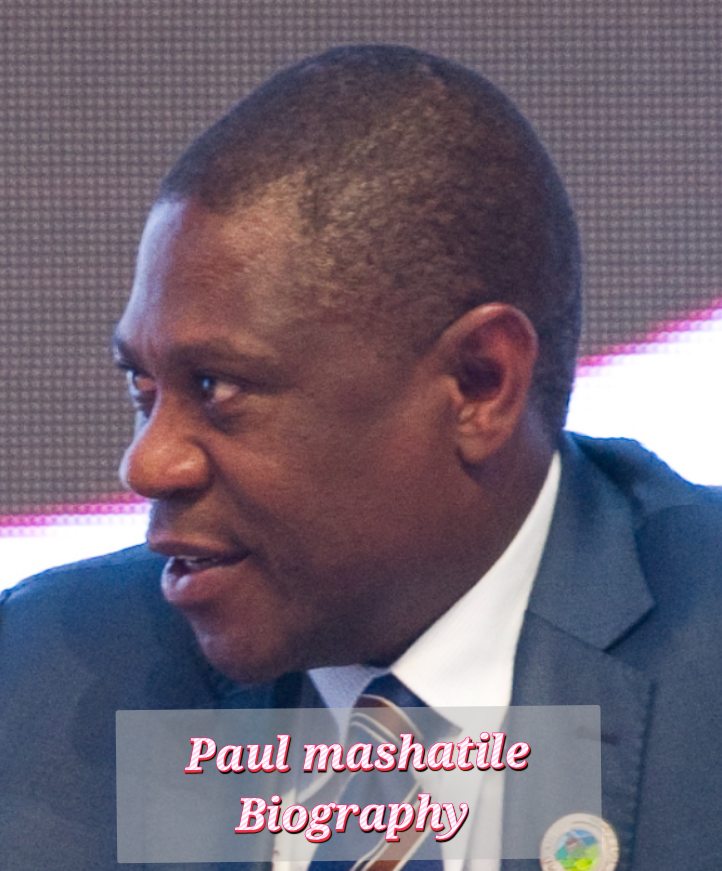
Paul Mashatile Biography
Paul Mashatile serves as the ninth Deputy President of South Africa. He took office on 7 March 2023 after President Cyril Ramaphosa appointed him. Born Paulus Shipokosa Mashatile on 21 October 1961, he has spent most of his adult life in public service. His story shows a clear path from student activist during the tough years of apartheid to one of the top leaders in the African National Congress (ANC) and the national government.
This article gives a clear and simple overview of his life. It covers his early years, education, political career, current duties, personal life, and what he has contributed to the country. Readers will gain a better understanding of how Mashatile grew from a young person in a modest family to a key figure helping to shape South Africa’s democracy. His experiences during the struggle against apartheid shaped his strong commitment to service and community development. The biography aims to educate readers in plain language so that anyone can follow and learn from his journey.
Paul Mashatile Early Life and Background
Paul Mashatile was born on 21 October 1961 in Gerhardsville, a rural area near Pretoria in what is now the City of Tshwane, Gauteng Province. He came into the world as the third of eight children. His father, Bishop Diamond Nyangeni, worked on a farm and served as a priest in the East Hethlon Church. His mother, Mirriam Nomvula Mashatile, worked as a domestic worker and sold vegetables and other small items to help support the family.
The family lived simply. The children learned the value of hard work early by helping their mother with her small business. This experience taught them discipline and entrepreneurship from a young age. Later, the family moved to Atteridgeville, west of Pretoria. There, his father continued his church work until he became a bishop. Bishop Nyangeni passed away in 2011 at the age of 82. His mother lived until 2020.
As a child, Mashatile experienced the daily realities of life under apartheid. These early conditions helped form his awareness of social injustice. The support and example from his parents gave him a strong foundation of faith, work ethic, and care for others. These values stayed with him as he grew older and entered public life. His background in a large, working-class family in a divided South Africa played an important part in his later decision to join the fight for freedom and equality.
Paul Mashatile Education
Mashatile began his schooling in the late 1960s at Paradise Bend Primary School in Diepsloot. He stayed with his aunt and uncle during that time. In 1972, he returned to Atteridgeville and continued at Bathabile Primary School.
For high school, he moved again to Johannesburg and attended Alexandra High School, also known as “Roma” because it was once a Roman Catholic school. He completed his matric (final school year) there in 1982. While at Alexandra High School, he took part in church activities. He served as secretary of the church and taught Sunday school. These roles helped develop his sense of responsibility and leadership even before he became politically active.
After finishing school, Mashatile did not pursue a full university degree at that stage. He later earned additional qualifications to support his work in government. These included a Post-Graduate Diploma in Economic Principles from the University of London, as well as certificates in Public Finance and Fiscal Policy from UNISA and Management Advancement from Wits Business School. These studies added practical skills in economics, finance, and management to his experience.
His education combined formal schooling with real-life learning through activism and community work. This mix prepared him well for the many roles he would take on in provincial and national government.
Paul Mashatile Career
Mashatile started his political journey as a student in Alexandra township. He joined the Congress of South African Students (COSAS). In 1983, he co-founded the Alexandra Youth Congress (AYCO) and became its first president. This group helped young people organize against apartheid.
He rose quickly in the United Democratic Front (UDF). He served as Assistant General Secretary for the Southern Transvaal region and later as General Secretary from 1989 to 1990. His activism led to serious challenges. From 1985 to 1989, he was detained without trial for four years under the State of Emergency. During that time, he joined an 18-day hunger strike as part of a wider protest.
When the ANC and South African Communist Party (SACP) were unbanned in 1990, Mashatile helped rebuild their structures in the Pretoria-Witwatersrand-Vereeniging (PWV) area, now known as Gauteng. He served as General Secretary of the SACP in Gauteng, ANC Branch Organiser in Alexandra, and head of political education for the ANC in the PWV region. He also acted as Provincial Secretary of the ANC in Gauteng for six years, working alongside leaders such as Tokyo Sexwale.
After democracy arrived in 1994, Mashatile entered formal government. He became a member of the Gauteng Provincial Legislature and served as Leader of the House. Between 1996 and 2008, he held several Member of the Executive Council (MEC) positions in Gauteng. These included portfolios in Transport and Public Works, Safety and Security, Housing, and Finance and Economic Affairs.
In 2008, he became Premier of Gauteng, taking over from Mbhazima Shilowa and serving until 2009. From 2009 to 2010, he served as Deputy Minister of Arts and Culture in the national cabinet under President Jacob Zuma. He then became full Minister of Arts and Culture from 2010 to 2014. In that role, he worked on policies to grow the cultural and creative economy.
He returned to Gauteng government roles between 2014 and 2018, including work in Human Settlements. Within the ANC, he served as Provincial Chairperson in Gauteng from 2007 until 2017. At the ANC’s 54th National Conference in December 2017, he was elected Treasurer-General of the party. He later acted as Secretary-General starting in January 2022.
In December 2022, at the ANC’s 55th National Conference, Mashatile was elected Deputy President of the ANC. President Cyril Ramaphosa appointed him Deputy President of South Africa on 6 March 2023. He was reappointed to the position on 30 June 2024 following the national elections.
Throughout his career, Mashatile focused on practical projects. These included support for infrastructure like the Gautrain concept during his time in Gauteng, initiatives for small businesses, and efforts to renew townships. His long service in both provincial and national roles gave him wide experience in governance, finance, and community development.
Paul Mashatile Current Role
As Deputy President of South Africa since March 2023, Paul Mashatile assists President Cyril Ramaphosa in running the government. He holds several important responsibilities assigned by the President. These include serving as Leader of Government Business in Parliament, Chairperson of the South African National AIDS Council, and Chairperson of the Human Resource Development Council of South Africa.
In his current position, Mashatile takes part in efforts to improve service delivery across the country. He supports the District Development Model, which brings different levels of government together to make services work better for citizens. He also represents South Africa at international events, such as investment conferences, G20-related meetings, and forums on economic cooperation with countries like China.
He speaks regularly on topics such as skills development, job creation, infrastructure, and youth opportunities. As Chairperson of the Human Resource Development Council, he helps guide work on education and training to meet the needs of the economy. In 2026, he addressed the fifth HRDC Summit and other gatherings focused on growth and investment.
Mashatile continues to play a role in ANC leadership as its Deputy President. His duties combine day-to-day government work with longer-term planning for the nation’s development. He often emphasizes unity, hard work, and practical solutions to the challenges facing South Africa.
Paul Mashatile Personal Life
Paul Mashatile has been married twice. His first wife, Manzi Ellen Mashatile, was a businesswoman who ran a beauty salon. They were together for many years and had four children: Palesa, Thabiso, Tinyiko, and Ayanda. Manzi passed away in July 2020. In November 2020, Mashatile launched the Manzi Mashatile Foundation in her memory. The foundation focuses on education programmes to help young people in communities.
In March 2023, Mashatile married Hlumile Mjongile (also referred to as Humile Bogatsu in some records). Reports indicate he has six children in total, with additional names sometimes listed as Zodwa and Goapele.
Family has remained an important part of his life. He has spoken about the influence of his parents and the lessons he learned growing up in a large household. The Manzi Mashatile Foundation stands as a personal project that continues his late wife’s interest in education and community support.
Mashatile keeps a relatively private family life while carrying out his public duties. His personal experiences, including the loss of his first wife, have shaped his support for causes linked to health, education, and family values.
Paul Mashatile Legacy
Paul Mashatile’s legacy is tied to his long years of service in the struggle for democracy and in government after 1994. As a young activist, he risked his freedom by organizing against apartheid. His four years in detention and participation in protests showed his dedication to change. After democracy, he helped build ANC and SACP structures and worked in many government positions to improve the lives of ordinary South Africans.
He contributed to provincial development in Gauteng through roles in transport, housing, safety, and economic affairs. Projects that supported small businesses and township renewal carry his involvement. As Minister of Arts and Culture, he promoted the creative industries as a way to create jobs and celebrate South African culture.
As Deputy President, his focus on skills development, service delivery, and economic cooperation adds to his record of public service. He represents a leader who moved from grassroots activism to high office while keeping links to community issues.
His story forms part of the broader history of South Africa’s transition from apartheid to democracy. Many see him as someone who stayed loyal to the ANC and worked steadily through different levels of government. Future generations may study his path as an example of commitment, organizational skill, and service in a young democracy.
Conclusion
Paul Mashatile has lived a life of steady service to his country. From his birth in Gerhardsville in 1961 and his early years in a working family, through student activism and detention, to top positions in the ANC and as Deputy President, his journey reflects key parts of South Africa’s modern story.
He gained experience in education, provincial governance, national cabinet roles, and party leadership. Today, he continues to support efforts in skills development, service delivery, and economic growth. His personal commitment, shown through the Manzi Mashatile Foundation, highlights the value he places on education and family.
Mashatile’s biography offers lessons about perseverance, community involvement, and the importance of building strong institutions. As South Africa faces new challenges, leaders like him remind citizens of the long road already traveled and the work that remains. His story encourages readers to learn more about the people who help shape the nation’s path and to take an active interest in good governance.
FAQs
Who is Paul Mashatile?
Paul Mashatile is a South African politician and the current Deputy President of South Africa. He has served in many roles in the ANC and government since the early 1990s.
When and where was Paul Mashatile born?
He was born on 21 October 1961 in Gerhardsville, near Pretoria in Gauteng Province.
What is Paul Mashatile’s educational background?
He completed matric at Alexandra High School in 1982. He later obtained a Post-Graduate Diploma in Economic Principles from the University of London and certificates in public finance and management from UNISA and Wits Business School.
What positions has Paul Mashatile held in government?
He served as MEC in various Gauteng portfolios, Premier of Gauteng (2008-2009), Deputy Minister and then Minister of Arts and Culture (2009-2014), and has been Deputy President of South Africa since March 2023.
Who are members of Paul Mashatile’s family?
He was married to Manzi Ellen Mashatile until her passing in 2020. They had four children. In 2023, he married Hlumile Mjongile. He has six children in total.
What is the Manzi Mashatile Foundation?
It is an organization launched by Paul Mashatile in November 2020 to honor his late wife. The foundation supports education programmes in communities.
What does Paul Mashatile do as Deputy President?
He assists the President, chairs councils on AIDS and human resource development, supports service delivery through the District Development Model, and represents South Africa in investment and international forums.